Viewing archives for Blog

Congratulations to our winners

As part of our 10th Anniversary celebrations Culham St Gabriel’s Trust invited organisations to apply for ten £1000 grant awards. We had an exceptionally high number of applications and trustees had some very difficult decisions to make, however the following projects stood out for their innovation and creativity. We look forward to sharing more about these projects in due course through our blogs, newsletters and events.

Denise Angell, Warren Road Primary School – Celebrating diversity with our parents and community

Jennie Downes, Diocese of St Asaph – Cynefin- identity and belonging

Joanne Harris, Broughton High School – Religious Education and Careers Webinar

Terry Hart, Diocese of Manchester – Engaging with Judaism

Laura Knight, Saxlingham Nethergate CE Primary School – Our Multi-Faith Society

Hannah Jones, Myton School – Promoting learning about world religions and global culture

Helen Jones, LTLRE North West – A Learn Teach Lead Primary Early Career Teacher Network

Karen Longden, St Barnabas CE Primary School – Faith Food Café – a place to share, support and celebrate

Catriona Martin, RE Matters – Challenging religion and worldview stereotypes

Ruth Marx, Tower Hamlets SACRE – Key Stage 5 Core Religious Education Provision across Tower Hamlets

As a Trust we are deeply saddened by the news of The Queen’s death last Thursday. I have found the many tributes to her incredibly powerful and moving. What strikes me is the way in which she was held in such high regard by some many different people, people from diverse backgrounds, with different worldviews and cultures. She truly served her people, those of all faiths and none. She understood the way in which people with often contrasting worldviews can come together, to bring hope, to challenge injustice. What an incredible legacy this is.

Overwhelmingly she had a servant heart. Servant leaders value people for who they are. Servant leaders put others first, they are humble. Servant leaders listen because they want to learn from others, they seek to understand and discern. Servant leaders are dependable, and display kindness and concern for others. The Queen demonstrated these values and qualities throughout her life, often in extraordinarily difficult times. She was steadfast, constant, and utterly dedicated. In this, she was an inspiration to us all. I hope that I can in some small way emulate this dedication and servant heart, not only my professional life but in my personal life too.

The Queen’s servant heart is one that we as a Trust strive to share too. We aim to be responsive, generous, and available to all our partners. Over the last year we have been challenged as a Trust to consider the question, how can we best serve our community? I imagine this might have been a daily question the Queen asked herself, how can I best serve my people today? The outpouring of love and tributes in the last few days demonstrate how she touched so many over so many years through her daily service.

The Queen was someone with incredible integrity. A value which is sadly not seen frequently in public life these days. The Queen was kind, dependable and trustworthy in the way she fulfilled her role. I believe that we must learn from this. Integrity must lie at the heart of what we do and how we engage with others in our personal and professional lives. As The Queen so clearly demonstrated, these values will bring people together for the good of our communities.

So, as we embark on this new term, with a new Prime Minister and a new King Charles III, I shall particularly keep the values of service and integrity close to my heart and remember The Queen as a woman who devoted her whole life to the giving of herself to others.

In our 10th Anniversary Year, it is perhaps fitting that we also celebrate the dedication and leadership of John Keast OBE as Chair of the Trust over the last 4 years. At the end of August John stepped down as Chair, as his term came to an end. John has not only given his time, but also his wisdom and enthusiasm taking the Trust through a strategic review. I am personally indebted to John for supporting me as I took on the role of Chief Executive in 2019.

In addition to his work for the Trust, John has given hugely to the wider religion and worldviews community over many years. He will be greatly missed, but we wish him all the very best in his long-awaited retirement.

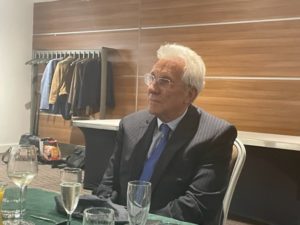
John Keast OBE, Chair of CSTG 2018-2022

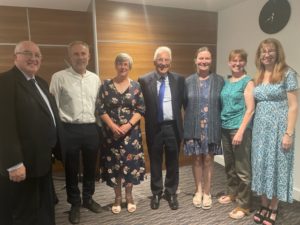
Some of our trustees past and present with John Keast OBE and Kathryn Wright, Chief Executive
We are delighted to announce that Dr Linda Whitworth became the new Chair of the Trust on 1st September, and that Nansi Eliis has become the new Chair of Grants and Education Committee.

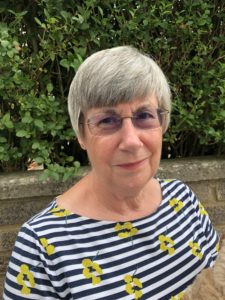
Dr Linda Whitworth, new Chair of CSTG from September 2022
As incoming Chair Linda writes,

Following John Keast’s wise and very effective leadership as Chair of Trustees over the last few years, I am excited to be taking over as Chair at a time of both challenge and opportunity. Religion and Worldviews education has seen considerable developments recently and the Trust is in the forefront through campaigning and supporting research and teaching.

I am particularly looking forward to working with the growing team of staff, consultants and trustees who make up the Trust. Our vision and strategy objectives are at the heart of all we do, from leadership programmes to understanding and promoting a positive perception of the subject.  As a teacher educator I have benefitted from the support of the Trust and I am delighted that we continue to support teachers and other colleagues at all stages of their careers.

The Trust is celebrating its 10-year anniversary this year, so this is a good time to reflect on what we have achieved and how our continuing vision could develop. There is plenty of work to do and I am looking forward to contributing to the Trust’s role in the religion and worldviews community.

To: The Chair of the ISRSA and its council members,

We are writing as Chief Executive, the Chair of Trustees and the Chair of Grants and Education Committee of Culham St Gabriel’s Trust to express our disappointment and concern at the publication of your recent report: Religion and Worldviews (Weltanschauung); we respectfully urge you to withdraw it.

We are disappointed because the report is an inaccurate representation of the Commission on RE (2018) and subsequent developments of religion and worldviews. In light of this we are concerned about the ISRSA’s reputation. This is important to us as we have funded your essay competition, and there is an associated reputational risk for the Trust. We note, for example, that Rudolf Eliott Lockhart, Chief Executive of the Independent Schools Association, has expressed publicly his personal reservations about the report. In addition, we see that several academics have expressed grave concern regarding claims made in your report about recruitment being undermined by a religion and worldviews approach, claims these academics say are unfounded. The report does not consider the many developments, including a literature review and discussion papers which build on the Commission report.

We are concerned about the lack of transparency regarding the process of development of the report and its research base. The report as published by the ISRSA does not explain the following:

  • Who authored the report
  • How views of the ISRSA Council were gathered
  • If and whether ISRSA members views were surveyed, how these results were analysed, and conclusions drawn
  • Whether the views are representative of the ISRSA membership, and/or the views of the entire ISRSA council and/or the views of the authors on behalf of the ISRSA.

This contrasts starkly with the report of the Commission on RE (2018). The CORE Report makes clear who drafted the report (Amira Tharani), the Chair of the Commission (Very Revd Dr John Hall) names of the commissioners (p.78-80) and 17 pages of organisations and people consulted or who provided evidence (p.81-97). Therefore, the lack of transparency about the methodology used for your own report is not just telling but concerning. 

Our call to you is to withdraw the Report and enter a dialogue with the Religious Education Council of England and Wales, to whom many of the comments in your report are directed, about the development of the subject. We note the eight reservations regarding a religion and worldviews approach. We would encourage you to read the following well-informed critiques of your arguments listed at the end of this letter. 

Yours sincerely,

Dr Kathryn Wright, Chief Executive
John Keast, OBE, Chair of the Trust
Dr Linda Whitworth, Chair of Grants and Education


Professor Trevor Cooling, with accompanying statement from Professor Bob Bowie https://blogs.canterbury.ac.uk/nicer/personal-response-addressed-to-the-isrsa-patron-and-council-from-professor-trevor-cooling-emeritus-professor-at-canterbury-christ-church-university-to-the-isrsa-report-religions-and-worldviews-welt/

Dr Wendy Dossett https://reformingre.wordpress.com/2022/07/02/the-isrsa-report-a-personal-response/

Mr Wayne Buisst https://venividiteachy.wordpress.com/2022/06/15/obscure-german-words-and-other-such-ablenkungsmanovers/

Luke Burns https://ocrs.online/2022/06/20/what-the-weltanschauung/

Kathryn Wright, our CEO, spoke at the International Ministerial on Freedom of Religion or Belief this week. She took part in an official conference panel discussion exploring how we can help children and young people with different religious and non-religious worldviews grow into adults who build societies where differences are valued and respected and where everyone is free to contribute.

In this blog she shares her opening words to the panel discussion about why we should teach about freedom of religion or belief (FoRB), what we might teach, and how we might teach it.

Kathryn Wright, our CEO, spoke at the International Ministerial on Freedom of Religion or Belief  (FoRB) on 5-6 July 2022. She was also planning to contribute to a fringe event organised by Humanist UK, but sadly due to a scheduling clash she was unable to fulfil this invitation.  The following blog is a transcript of her planned contribution. 

Culham St Gabriel’s in association with the RE Policy Unit is delighted to be working with the UK Forum for Freedom of Religion or Belief to host an exhibition stand at an International Ministerial taking place on 5-6 July in London. Our chief executive is speaking at the official conference, and also at a fringe event organised by Humanist UK. The conference will bring together governments from around the globe, parliamentarians, faith and belief representatives, and civil society to urge increased global action on freedom of religion or belief for all. The overarching themes of the conference will be preventing FoRB violations and abuses, and protecting and promoting freedom of religion or belief. Culham St Gabriel’s are involved in promotion the importance of education in furthering freedom of religion or belief. There are resources and events to support the conference, many of which could be used in schools or other educational settings. Details can be found here: https://www.londonforbfringe.com/

We are celebrating our 10th anniversary today! To celebrate we are launching 10 special grant awards of £1000 each. Applications have now opened. We are looking to support 10 small innovative projects or initiatives that will make a difference! Closing date: 22nd September.

Find out more and apply at https://www.cstg.org.uk/grants/celebrating-10-years/

Culham St Gabriel’s Trust turns 10 years old on 21st June 2022! 2012 was an important year in many different ways- the Diamond Jubliee and the London Olympics spring to mind- I also turned 40 that year too! However, the birth of Culham St Gabriel’s bringing together two church college Trusts was a very significant moment for the religious education community. In this blog a former Chair and director express their reflections, alongside the current chair. I also draw out some themes running through the last 10 years and what these might mean for the next decade.

Reflections from the first Chair of Culham St Gabriel’s, Dr Priscilla Chadwick OBE…

‘Culham St Gabriel’s was created in 2012 by the coming together of two church college trusts which had worked in close partnership for several years prior to the merger. St Gabriel’s Trust arose originally from the college’s closure by Mrs Thatcher in 1977, leading to the transfer of its buildings to Goldsmith’s College. At that time, St Gabriel’s had only enough money to offer a few book grants each year, but a wise legal adviser had inserted a footnote to the transfer that, should Goldsmith’s ever wish to relinquish the buildings, these would revert to the St Gabriel’s trustees at the original price! Thus the trustees were able to sell the college on to another educational institution, thereby providing the Trust with a significant charitable endowment for the future.

The charitable objects enabled the trustees to support RE teachers wishing to enhance their postgraduate qualifications and later created an important partnership with the Culham Educational Foundation, setting up the St Gabriel’s Programme. This initiative developed innovative resources for RE and established the annual St Gabriel’s Weekend, firstly in Sunningdale and later at Wokefield Park, offering a free of charge opportunity for RE teachers to come together in a residential setting and share good practice, something that most would otherwise be unable to do, isolated in their own schools and often undermined by government educational policy: for many, these weekends were utterly transformative professional experiences which inspired them as they returned to their schools.

When in 2012 the two clerks of St Gabriel’s and Culham were both planning to retire, the opportunity arose for the two trustee bodies to come together, building on the cooperation over many years, to create the Culham St Gabriel’s Trust. Thus the significant legacy of both colleges would be safeguarded for future generations of RE teachers. With a generous endowment, this now meant that the Trust could more easily support major national initiatives such as the RE Council and the 2018 Commission on RE. This commitment vital to RE continues to flourish under the strong leadership of Kathryn Wright.’

What strikes me about Priscilla’s reflections is that the Trust’s focus on free, transformative, and inspiring resources and professional development still very much lies at the heart of the Trust. The reimagining of RE:ONLINE over the last few years, our scholarship programmes and the recent launch of our free e-learning platform continue to fulfil this mission.

Reflections from the first Director of Culham St Gabriel’s, Dr Mark Chater…

First, the merger itself: I gather that the idea first occurred to Priscilla and John Gay while on a walk. From this the idea grew, building on the many years in which the two former Trusts had worked together. Mutual trust, confidence and enthusiasm deepened. John Keast chaired the Implementation Committee which looked after the details – of which there were many! Within only a few years, Trustees saw themselves as ‘CSTG’ rather than ‘Former C’ or ‘Former St G’. Now, everyone takes the existence of the merged Trust for granted. But it was a major achievement at the time, based on shared vision and painstaking care over detail. 

Modernising the grant application process to make it more user-friendly for applicants, and less burdensome for Trustees, was an early achievement. Putting it onto an online process with new, RE-focused grant criteria helped to place CSTG on the map. The feedback from grantees was positive. Sharing information and ideas with other RE grant-givers has also grown gradually. 

Three significant CSTG grant decisions which, perhaps, have deeply influenced the course of RE for the medium term: Understanding Christianity, the NATRE/RE Today regional champions, and the Commission. The first of these had a long and at times lively gestation, but eventuated in resources which really enhanced the rigour and excellence of RE. The regional champions have strengthened the infrastructure of support available to teachers, and contributed to the growth and sustainability of NATRE. The Commission, which submitted its final report and recommendations in 2018, changed the conversation about the future of RE (or Religion & Worldviews) and we wait in joyful hope for a government bold enough to implement the much-needed change which it envisaged. 

But that is not the end of the story. I hope and pray that CSTG will continue its vital leadership, support, and innovative thinking for many years to come. 

Having worked with Mark for a number of years as a CSTG Consultant I think he instilled in me an understanding of the Trust’s forward-thinking approach. Mark’s reflections show how the Trust has always been sensitive to the ever-changing educational landscape, responding to new contexts. At its heart, though always remains the focus on serving others in the best possible way. Therefore, we have some exciting new grant making plans to announce. Firstly, we are launching special 10th Anniversary grant awards for small, innovative projects that make a difference. Secondly, later in the summer we will be sharing details of our new scholarship programme series to run alongside our current masters and leadership programmes. Watch this space!

Reflections from our current Chair, John Keast, OBE…

So CSG (as I think of it) is ten years old. How time flies! As we commemorate this milestone, my mind goes back to the two constituent trusts, with their illustrious Chairs, trustees and staff, as well as to CSG itself. There are too many to mention them all in this short piece, but their vision, dedication and skill not only served those trusts well, but led to the formation of what is now a very effective force for good in the world of religious education. As I retire as Chair of CSG this year, I indulge myself below in surveying the whole period from 2003 when I first became a trustee of both constituent trusts then the merged trust. What highlights come to mind?

First, the people:

  • Three prominent and very effective chairs – Colin Alves, Tony Williamson and Priscilla Chadwick, each of whom had distinguished but varied careers in their own right, but brought their considerable expertise and experience to bear in building up the separate and then joint trusts.
  • Four extremely competent and dedicated officers (although they had different job titles) – John Gay working for both Culham and St Gabriel’s separately, though often in partnership with Brenda and Peter Duffells at St Gabriel’s, and Mark Chater, first CEO of the merged trust. All of these excellent people served the trusts so well, along with some many other partners and consultants over the years, with whom they worked.
  • The many trustees, who so well connected CSG to other organisations and spheres of influence, who brought the benefit of their links and experience to the work of the trust.

Second, specific events:

  • The massive teacher conferences, mostly held at Wokefield, which did so much to inspire and build the confidence and morale of teachers in RE classrooms. Not cheap to put on, but how exhilarating, powerful and enjoyable they were!
  • The smaller but very visionary colloquia, conferences and meetings which did so much to influence how RE both survived and thrived after the introduction and development of the National Curriculum, after the Great Education Reform Bill 1988.
  • Working in partnership with other organisations in RE, again too many to mention.

The reference to teachers, meetings and partners above encapsulates some of the core aims of the trusts over the years – the importance of the teacher of RE, and providing opportunities for training and support via grants and events; the need to influence policy and curriculum development in RE both nationally and locally; and the support of RE in schools of all kinds, not just those with a religious character.

Times change, and so must the capacity of RE to respond. CSG is now very properly focussed on clear strategic objectives. These have become so important in the past ten years when the threats to the wellbeing and structure of RE, based as it still is on the 1944 Education Act model, have become more serious. So in the past ten years, in addition to its continued focus on teachers, CSG has developed a leading role in helping to bring the stakeholders in RE together, not least through its support of the RE Council, which is essential to the future of the subject. With its current CEO and Board, CSG will become and even more significant player in the RE community of the future. Long live CSG!

It has been a pleasure to work with John over the last three years. He will step down as Chair this summer, and the Trust will enter another new chapter. John’s emphasis on the importance of people shines through his reflections. Nurturing relationships with all our grantees is vital. Yes, we provide funding for individuals and projects, but we also want to invest in people. We often talk about becoming part of the CSTG family. Empowerment and collaboration are two of our values, and we aim to live these out through all our work. As we enter a season where a new Education Act is on the horizon, John’s final words will be vital. We will continue to strive towards our vision by:

  • Increasing public understanding of religion and worldviews education
  • Engaging with, informing and influencing decision makers
  • Creating well-informed, empowered and influential educationalists
  • Establishing and building strategic and collaborative partnerships and networks
  • Commissioning and publishing focused and accessible research
  • Championing and developing inspired and well-resourced teaching and learning

Here is to another ten years… and beyond!

Kathryn Wright and guests

I’m not sure if you have plans for the Queen’s Platinum Jubilee Weekend, but it’s a great time for people to come together, relax and hopefully enjoy some sunshine. As I was reflecting on the jubilee, it got me thinking about the journey that RE has been on over the last 70 years.

At the start of the Queen’s reign religious instruction was primarily focused on Christian nurture. As we moved towards her Silver Jubilee (1977) the subject took on a more academic focus around exploring and comparing different world religions, particularly in light of the School Council Working Paper 36 (1971). It was only in 1988, when the Education Reform Act renamed Religious Instruction as ‘Religious Education’ that this was enshrined in law. It stated that agreed syllabuses should, reflect the fact that the religious traditions in Great Britain are in the main Christian whilst taking account of the teaching and practices of the other principal religions represented in Great Britain.’ Just after the Golden Jubilee (2002), a national ‘Non-Statutory Framework’ was produced, the first national document to set out the purpose of RE. The framework was produced by the QCA, the national body in charge of curriculum at the time. It stated that pupils should learn about religion by enquiring into the nature of religion and learn from religion through reflecting on their responses in light of their learning. It also included learning about non-religious viewpoints, such as Humanism. Just after the Diamond Jubilee (2012), an updated framework for RE was produced. It was written by RE advisers, with input from worldview communities and teachers. The aims shifted to: (a) know about a range of religions and worldviews; (b) express ideas and insights about religions and worldviews; (c) engage seriously with religions and worldviews. I realise this is a rather quick summary, and many others have written extensively about this, but you can see our subject has been on quite a journey so far…

So now as we are about to celebrate the Platinum Jubilee what is the next step on this journey? I believe it is time to embrace a paradigm shift in the way we think about our subject. Many are already writing about it; teachers are already trying out new ideas and academics are researching and wrestling with it. This next step on the journey is, I believe, a religion and worldviews approach. This builds on the excellent work of the Commission on RE (2018). A draft national statement of entitlement advocating for this new approach can be found in a recently published document https://www.religiouseducationcouncil.org.uk/projects/draft-handbook-and-nse/ In addition, our newly launched Culham St Gabriel’s e-learning platform provides a short introductory course on religion and worldviews explaining what this new approach looks like and what it means for the classroom https://courses.cstg.org.uk/

So as you enjoy the celebrations this weekend, give a shout out for RE too!! And, talking of celebrations…. Its Culham St Gabriel’s 10-year anniversary in June…!!