Viewing archives for Blog

On Saturday I’m undertaking my first Ultra Challenge walk. Its only 25km but I’ve been training for it over the last three months. Having a history of injury, I decided to focus on whole body training – cardio, flexibility and strength – to hopefully mitigate against any major aches or pains!! I’ve also signed up with two friends, and we’ve been tracking each other’s progress on Strava for the last few months. It’s been a great focus; I like having something to aim towards. I find it really motivating.

Importance of goals

Having goals and working towards them is something that transcends more than just my physical activity each week. As an organisation we have five strategic objectives and each year a series of short-term goals sit under these to help us work towards our vision. It means that even some of the more ‘mundane’ tasks can be viewed within the bigger picture; each aspect of our work contributing to the whole. This is very motivating as every element of our work helps us achieve our goals, but also means we can measure our impact. For those who have just applied to our leadership programme we asked, ‘Where do you see yourself professionally in 5 years’ time?’ It is good to look forward, to dream…

A full workout

Like ongoing physical training, we need to keep ourselves agile, building strength and endurance. This means exercising ourselves in different ways – reading blogs and articles, doing one of our e-learning courses perhaps, talking to others or reading a piece of research. For those who have just applied to our leadership programme we asked, ‘What was the last educational article/book you read and what impact has it had on you professionally?’ How might you answer this question? Or consider perhaps when you last chatted to someone about what happened in your classroom, or how you have structured your curriculum.

A team effort

Supporting and encouraging one another is vital. We work with a significant number of people through our trustees, consultants, grantees, other funders, and partner organisations. Having common aims about the importance of an education in religion and worldviews helps us to work collaboratively and more effectively with our partners. In addition, our all our scholarship programmes have a community of practice which support and nurture conversation between participants to help everyone find their voice in the religion and worldviews eco-system! I’m looking forward to the RE Hubs website being launched soon as another way of bringing people together as well as signposting to professional development.

So think about your goals, consider your training and network with others. I shall report back on my walking challenge, but I’m already keen to sign up for another one in September to keep the motivation going…

A review of our work in 2021-22
Our e-learning courses
Our research area
Our scholarship programmes
If you’re interested in an Ultra Challenge

Parliamentarians and faith and belief groups join calls to attract a new generation of teachers to the subject

A campaign to attract a new generation of RE teachers has kicked off with teaching groups, religious organisations and parliamentarians stressing the importance of the subject for preparing students for life in modern Britain.

As of January, UCAS data show that teacher recruitment for all subjects is down 22% from last year. However RE stands out, being down a third of applicants from the last recruitment cycle.

Government inaction over recruiting teachers to RE has been blamed. The Department for Education (DfE) has so far missed its target for the recruitment of RE teachers in nine of the last ten years.

Despite this year’s fall in applicants, the subject continues to grow in popularity. Over the last five years entries to the GCSE have stood around an average of 250,000 with entries to the full course GCSE rising by 30% over the last decade.

The recruitment campaign – entitled ‘Beyond the Ordinary’ – draws attention to the academic and knowledge rich approach of the subject to life’s big questions, and will seek to attract a set of talented graduates up to the task of getting young people to grips with the complex nature of modern belief.

Kathryn Wright, Chief Executive Officer of Culham St Gabriel’s Trust, which is supporting the campaign, said: “Religious education is an important curriculum subject enabling children and young people to navigate our complex multi religious, multi secular society. Everyone has a worldview, and it’s important we prepare young people to become free thinking, critical participants in public discourse, who can make informed judgements about matters of religion or belief and reflect meaningfully on the big questions in life.”

We are looking for ambitious graduates from a range of humanities and social science subjects who can deliver an academic and rigorous curriculum aimed at getting young people to think critically about their own beliefs and those of others.”

Last March, the Father of the House, Sir Peter Bottomley MP hosted a roundtable on the future of the subject. In October, a Westminster Hall Debate saw MPs and Peers from across the House agree on its importance for life in modern Britain as well as express concern around a lack of government support for the subject.

Lord Karan Bilimoria said: “The latest teacher recruitment figures are deeply worrying. Parents are concerned, schools are concerned and so too the young people are missing out.

“As a Champion for RE, I’ve heard numerous times from students that this is one of the few times in the classroom where they get to say what they think about the world around them. At present we face doing a disservice to a generation of young people ill-equipped to deal with the complexities of belief in Britain and the world beyond. This campaign is about getting the best humanities graduates into the classroom to help them deliver a modern RE curriculum reflective of belief in our society.”

Teacher training courses are open to graduates from a range of academic disciplines and from all sorts of diverse backgrounds, with Subject Knowledge Enhancement courses available from schools, universities or other providers.

Anyone looking for more information about training to be a RE teacher should visit https://cstg.org.uk/campaigns/teacher-recruitment/becoming-a-teacher

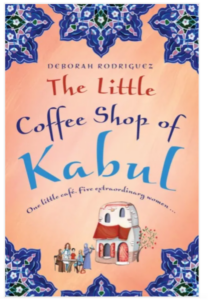
As we celebrate World Book Day 2023, I thought I’d share a few reflections on one of my favourite books. It was written some time ago, but I only came across it a few months ago. I had clearly missed out! The book is The Little Coffee Shop of Kabul by Deborah Rodriguez.

It’s a book about real women. I like a book where there are authentic characters, people I feel I can connect with in some way. Although set in a completely different part of the world, one of the most dangerous places on earth, I felt I could identify with different aspects of the women. I warmed to their sense of justice, their ‘can-do’ mentality and that anything was possible. Sunny, the café proprietor’s, generous hospitality to anyone who strolls through her café doors is inspiring.

It’s a book about inter-connectedness. The lives of five different women are inter-woven in a time of conflict and disruption. They form a unique bond which changes each of them in different ways. Although from very different backgrounds, the women come together in the face of adversity and learn to appreciate and celebrate one another’s diverse experiences of life. Bonds of sisterhood are important to me personally, and it was great to read a novel which placed this at the heart.

It’s a book about hope. One must remember this is a work of fiction, it is not based on a true story. However, the theme of hope runs through this book. A hope that things can and do change. It brought beliefs and values to the forefront, explored them, and showed how when they are put into action lives can be transformed. Let’s hope one day this cannot just be a work of fiction but can become a living reality.

This is a vibrant, colourful book where I was transported to a different culture. It is emotionally challenging in places as the ongoing oppression of women forms a thread throughout the book. It is a powerful story and makes one value one’s own freedom.

Beyond the headlines about teachers’ strikes, there is a serious crisis brewing around recruitment of teachers through the initial teacher training (ITT) scheme. Despite the DfE’s targets for ITT trainees, numbers have fallen short According to UCAS data, the 2021/22 academic year had a 36% shortfall of the target of 32,600 trainees, a 10% increase from the previous year. Despite the offer of a starting salary of £30,000, it is unlikely to boost ITT applications for the upcoming September intake.

The shortage of trainee teachers is particularly affecting Religious Education (RE). Research by NATRE (2022) shows that nearly all Higher Education Institutions offering RE ITT courses have experienced a decline in trainee numbers, with some courses facing an 83% drop and others facing closure. This creates a patchy availability of RE teacher training, with areas like the West Midlands and North East being most affected. The Department for Education (DfE) has been aware of this problem for some time. Research by the RE Policy Unit (2022) found that it missed its target for recruiting RE teachers in nine out of the last ten years, even with lowered targets. Other subjects facing similar shortage issues have been offered consistent or reinstated bursaries that have been successful in attracting applicants. Geography, for instance, show signs of bucking the trend, with trainees eligible for a £25,000 bursary for the 2023/24 PGCE course.

The removal of the 2021/22 bursary for ITT religious education (RE) teachers has clearly had an impact on recruitment. Given this year’s data, it’s now clearly needed as a part of a broader strategy to reverse the decline. The Government has said it prioritises ‘investing in raising the standard of the workforce: to ensure all children in all schools are taught by well trained and qualified teachers’. RE is a subject where action on this commitment is much needed. The problem of using non-specialist teachers in RE occurs three times more frequently than in subjects like History. NATRE’s 2019 survey found that over half of RE teachers (53.6%) lack post-A level qualifications in the subject. For years, Ofsted has recognized this as a major problem. In its 2021 research review they warned that poor quality RE provision can imbed misconceptions about religious and non-religious worldviews. Other bodies, such as the All-Party Parliamentary Group on Religious Education have also expressed concerns around the impact of poor quality RE provision on young people and society. A recent Westminster Hall Debate saw members from across the house warn that poor quality RE provision threatened deeper thinking about life’s big questions, poor representation of faith communities, and a failure to prepare young people for life in global Britain.

The use of non-specialist teachers in religious education (RE) is a concern not only in the classroom, but also among parents and communities represented in RE lessons. According to a survey conducted by Culham St Gabriel’s Trust (2021), seven in ten of parents considered what their children learn in RE as important, with a similar majority stating that these lessons are their child’s main source of information about different religions and worldviews. It is therefore crucial to ensure that the teaching of RE in classrooms throughout the UK is accurate, relevant, and up to date.

The best way to achieve this is through well-funded RE ITT programs, supported by the Government. Teachers with subject specialisation understand the importance of promoting cooperation and presenting a diverse and accurate representation of religious and non-religious beliefs through drawing on sound scholarship and a range of voices. They are a vital part of our communities and the education of young people across Britain.

These are some of the suggestions of what we can all do to help stem the RE recruitment issue:

  • Write to your MP or visit them in a local surgery and raise their attention to the critical problems faced by RE, such as the decline of trainee teachers and the absence of an RE ITT bursary.
  • Share information about these issues on social media to create awareness among parents, pupils, headteachers, faith communities, etc.
  • Promote this article by posting its headlines on your website to reach a wider audience and encourage action.
  • Discuss the issue with headteachers, senior leadership teams, etc. to raise their understanding of the importance of RE and the challenges facing the subject.
  • Keep your local SACRE informed, for example, by attending meetings, emailing the chair, or requesting an agenda item, to ensure that the key decision-makers in RE are informed about the situation.
  • If you are a member of a faith, spiritual, or secular group, engage with governing bodies and leaders to ensure they understand the potential impact on the community’s understanding and representation.

References:

Culham St Gabriel’s Trust (2022) Religion & Worldviews Parent Survey 2022: https://www.cstg.org.uk/activities/campaigns/parent-survey/

DfE (2019) from a NATRE Fol request to the DfE in 2019

DfE (2022) Package to transform education and opportunities for most disadvantaged: https://www.gov.uk/government/news/package-to-transform-education-and-opportunities-for-most-disadvantaged

DfE (2022) Statistics: school workforce: https://www.gov.uk/government/collections/statistics-school-workforce

Insight UK (2021) A report on the state of Hinduism in Religious Education in UK schools: https://insightuk.org/wp-content/uploads/2021/01/Hinduism-in-RE_Project-report.pdf

NATRE (2022) REPU Report to RE Council Autumn 2022

Ofsted (2013) Religious education: realising the potential

UCAS (2022) 2022 Cycle Applicant Figures: https://www.ucas.com/data-and-analysis/undergraduate-statistics-and-reports/ucas-undergraduate-releases/applicant-releases-2022-cycle/2022-cycle-applicant-figures-30-june-deadline

Who are Culham St Gabriel’s Trust?

We are an endowed charitable foundation. The Trust is committed to providing teachers of religion and worldviews and other professionals working in this area with the support, connections, challenges and professional development they need. We want all partners, such as parents, school governors, faith/belief communities and policy makers, to be positively aware of the benefits of a high-quality study of religion and worldviews. Our last annual review provides a summary of our mission, values and strategy work.

Who are we looking for?

We are looking for new trustees with one or more of the following areas of expertise to advise and guide our Board and staff team:

  • Educational leadership e.g. headteacher, governors, chief executives
  • Communications, marketing, public relations
  • Human Resources
  • Investments, finance, accounts and controls experience
  • Digital/Media expertise
  • Advocacy, lobbying or campaigning

Culham St Gabriel’s embraces diversity, equity and inclusion. We encourage applicants from all backgrounds and especially those from historically underrepresented groups. Given the nature of our work we are keen to add voices from younger people and those early in their career. Previous trustee experience is not necessary.

Why become a Culham St Gabriel’s trustee?

You will have the opportunity to:

  • Make important strategic decisions and develop new skills
  • Network with professionals in other sectors
  • Influence and shape our activities and programmes
  • Improve religion and worldview literacy in the UK

What can we offer you?

We provide opportunities for training and development for those new to the role of trustee, as well as our own online events and conferences helping trustees understand in more depth the variety of programmes the Trust offers. Our Board meetings are a mixture of in person and online meetings. All committee meetings are held on zoom. We aim to make them as accessible as possible. All travel or other out of pocket expenses will be reimbursed. In addition, supply cover costs are available for serving teachers.

What is the time commitment?

The expected time commitment is four Board meetings, and between three and five online committee meetings per year. On average we would expect a trustee to spend about 16 hours per year in Board meetings, and between 5-10 hours in committee meetings.

I’m interested, how do I apply?

Please express your interest in this role by sending us your CV and a short covering letter explaining briefly why you would like to be considered as a Trustee. Please send this to deborah@cstg.org.uk

Closing date for Expressions of Interest is 5pm Friday 3rd March 2023, with Zoom interviews held in late February/early March. Successful applicants may be asked for details of two referees.

Our recruitment pack for new trustees is available to download below.

For more information and/or an informal chat, contact Kathryn at ceo@cstg.org.uk
For more information about the Trust visit www.cstg.org.uk

We are delighted to share our annual review and financial statement. We hope you enjoy reading about some of our highlights last year. In 2021-22, the Trust gave over half a million pounds to grant funded projects, strategic funding awards, campaigns and programmes to further its charitable objectives. Our review showcases some of the amazing work of those we have supported and partnered with over the last year.

What is Holocaust Memorial Day?

Holocaust Memorial Day (HMD) takes place every year on 27 January, the anniversary of the liberation of Auschwitz-Birkenau, the largest Nazi death camp. It is an international day to remember the six million Jews murdered during the Holocaust, alongside the millions of other people killed under Nazi persecution of other groups and in genocides that followed in Cambodia, Rwanda, Bosnia and Darfur. It is an occasion for everyone to come together to learn, remember and reflect.

Every year, a theme is selected for HMD and this year it is Ordinary People. Genocide is facilitated by ordinary people. Ordinary people turn a blind eye, believe propaganda, join murderous regimes. And those who are persecuted, oppressed and murdered in genocide aren’t persecuted because of crimes they’ve committed – they are persecuted simply because they are ordinary people who belong to a particular group (eg, Roma, Jewish community, Tutsi). Ordinary people were involved in all aspects of the Holocaust, Nazi persecution of other groups, and in the genocides that took place in Cambodia, Rwanda, Bosnia and Darfur. Ordinary people were perpetrators, bystanders, rescuers, witnesses – and ordinary people were victims.

In the last year, Culham St Gabriel’s has become more strategic about its work furthering Article 18 of the UNDHR – the promotion and protection of freedom of religion or belief (FoRB). Following participation in an International Ministerial conference last July, the Trust is has become pro-active in its pursuit of FoRB through a broad based, critical reflective education in religion and worldviews. Educating ordinary children and young people so that they can become the activists of the future to advocate and stand up for ordinary victims of discrimination in all its forms is a vital element of this. In addition, by ensuring children have deep knowledge and understanding of past (and present) genocides may help to prevent them becoming ordinary perpetrators or bystanders.

We are delighted to be welcoming Joe Miller from HMD to share more about the importance of the day and how you can commemorate it at our In Conversation event on Monday 16th January at 4.30pm. You can register here: https://www.cstg.org.uk/activities/events/in-conversation/

We encourage you to learn, remember and reflect in your workplace, school or home. In particular we encourage you to register for the online commemoration on 26th January and join with thousands of others at 4pm on 27th January when we will light a candle in our windows to remember those who were murdered for who they were and to stand against prejudice- in all its forms- today.

Holocaust Memorial Day Trust

Holocaust Memorial Day Trust (HMDT) is a registered charity, funded by the UK Government, to promote and support HMD. They provide resources and support for thousands of HMD activities every year in workplaces, youth groups, museums, prisons, schools, colleges and universities, places of worship, and more.

To learn more about HMD and this year’s theme, or to access free resources, visit hmd.org.uk

The village I live in have been hosting what we call ‘The Advent Adventure’ for the last nine years. Homes, community groups and businesses volunteer to host an advent window, one for each day for the 24 days of advent. This year the theme is the A-Z of Christmas. As one of the organisers, I decided I had better allocate one of the more difficult letters to myself, so I’m doing Q.

The main elements of my window are Quality Streets and a Quiz about the Queen’s Christmas messages. As I was preparing our window I began thinking about the religion and worldviews community. I wondered if the metaphor of Quality Streets was helpful…

Colourful and Vibrant

When you open a tin of Quality Streets you notice the vibrancy and colour. My experience of the religion and worldviews community this year has seen great enthusiasm and passion. It is a community full of energy! Teachers joining evening webinars and twitter conversations, advisers and volunteers giving up time to lobby and advocate with politicians, powerful and dynamic speeches given at conferences… the list goes on.

Diverse

After you are wowed by the colourful array of chocolates, you then look at the diversity of the choice on offer! If the tin contained all the same variety, it would not meet the needs of my own family (one person does not like the purple ones). Diversity is good. The religion and worldviews community is diverse. There are many different views and opinions. I think this is healthy. It enables us to model what ‘disagreeing well’ looks like and enriches our responses to issues we face.

United Together

Yet, all these different chocolates are part of the big tin (well usually, I did see some ‘purple’ only bags on the shelves!). This makes them Quality Streets. Over the last year I have witnessed the coming together of the religion and worldviews community in a new way. There is a renewed commitment and sense of urgency around improving standards, infrastructure and provision. This has been seen most recently by a growing consensus for a funded National Plan for the subject, spearheaded by the RE Policy Unit. ‘Fund a National Plan’ should perhaps go on the front of our tin!

Quality

Lastly, they are called Quality Streets. The work I do for Culham St Gabriel’s would not be possible without the wisdom and creativity of my team and trustees, as well as some amazing colleagues in other organisations we partner with. There is true quality in our religion and worldviews community; quality of ideas, quality of commitment and quality of professional relationships.

So if you open a tin of Quality Streets this season, think about the wonderful religion and worldviews community, its vibrancy, unity in diversity and quality. Have a great festive season!

To find out more about the funding of a National Plan see www.rethinkre.org

I recall a conversation I had with our youngest son when he was about three years old. He asked me if his soft toy Winnie the Pooh was real or not. I asked him what he thought made something real? He said it needed to talk and move. I said, but you can feel him, you are holding him in your hand. He looked puzzled. So what is real? As the same son turns seventeen this week, he is now asking these questions in a different way, often related to particle physics, or cell structure in biology… But he is still asking questions.

Earlier this term, Culham St Gabriel’s commissioned a nationally representative survey through Savanata ComRes. The survey asked circa 2000 parents in the UK for their views on a range of matters related to religion and worldview literacy. 

Close to 4 in 5 parents who responded discussed beliefs that affect people’s behaviour and decision-making with their child either sometimes or often. Over 70% discussed beliefs and practices of people with religious and non-religious worldviews, beliefs concerning what happens when we die and about the origins of the universe. Discussing some of the big questions in life, as well as philosophical and religious beliefs seems to be fairly commonplace in UK homes. I wonder how many other households have discussed the question ‘what is real?’.

Alongside this, the importance of school as a place where children learn about religious and non-religious perspectives was highlighted. Almost 70% said their child mainly accesses information about religious and non-religious worldviews at school. It is perhaps not surprising therefore, that 2/3 parents thought religious education was an important part of the school curriculum. 

In light of the #census2021 and evidence that we live in an increasingly multi religious, multi secular society, the importance of a broad based, critical and reflective education in religion and worldviews has never been more important. Parents agree. When presented with a new approach to the subject- religion and worldviews- parents were even more positive about its value. 

·      73% of UK parents said it is important to learn about the similarities and differences between beliefs and lived experience of different worldview traditions

·      72% of UK parents said that RE lessons should include teaching that worldviews are complex and may comprise both religious and non-religious beliefs

·      70% of UK parents said RE lessons should teach about the social and historical context of different religious and non-religious worldviews

So, if you are a parent or carer what questions have you discussed with your child today? 

Will you support us in calling on government to fund a National Plan for RE?


https://www.cstg.org.uk/activities/campaigns/parent-survey

https://www.rethinkre.org/what-do-we-want

My three ‘take-aways’ from RExChange 2022…

Living with and navigating complexity

One of the themes running through the conference for me was the complexity of the space we are navigating regarding religion and worldviews. The vibrancy and energy generated through the conference space, with diverse and sometimes conflicting views being presented was to me inspirational. It was fascinating to hear Adam talk about the broken ‘chain of learning’ regarding religion and belief literacy, but his solution was not one of ‘uniformity’, but rather one of shared understanding characterised by contextuality. Culham St Gabriel’s is increasingly partnering with organisations across this ‘chain of learning’ and I hope we can bring some helpful contributions to this complexity. Our new promotional films are one example of this perhaps (see below). One of the positive outcomes for me of the conference was the hospitable nature in which people debated and questioned different perspectives. I thought Gillian Georgiou exemplified this particularly well coming with great humility and openness in her keynote presentation. Perhaps we can move to a place where we don’t just live with or navigate complexity but celebrate it.

Co-existing well

Being comfortable co-existing with those who have a different worldview to ourselves therefore follows from the above. Tom Fletcher CMG’s challenge to us as to whether we are promoting trust and equity, and whether we are using or being used by technology resonated with many of us, I think. Tom’s emphasis on the importance of co-existing well, rather than putting up walls of division lies at the heart of our subject. In particular, I believe a religion and worldviews approach to our subject puts this at the centre. If we understand our own positioning, and approach knowledge as interpreters, we will be able to see the value of different voices and co-exist well. The Culham St Gabriel’s vision sums this up rather well – we want to see a broad based, critically reflective education in religion and worldviews which contributes to a well- informed, respectful and open society. Once again, the Theos animation Nobody Stands Nowhere comes to mind too. This is about truly positive co-existence.

Being courageous

Tamanda Walker ended her presentation by calling for boldness and courage in relation to anti-racist education. Tom Fletcher ended his keynote by saying we need to be brave. In many ways the conference was a clarion call for teachers and other educators to step up, to show that education, particularly an education in religion and worldviews, is key for the future health and well-being of our children and young people; and beyond that for the health and well-being of humanity (I like bold claim!). It was a call for more freedom, curiosity and creativity in school curricula, and to equip our children and young people with skills of diplomacy and problem solving, and to encourage them to be curious and above all, kind.

Thankyou to all our amazing contributors!

New Promotional Films https://www.cstg.org.uk/campaigns/promoting-an-education-in-rwv/promotional-film-collection/

Theos Animation Nobody Stands Nowhere https://www.youtube.com/watch?v=AFRxKF-Jdos

Tom Fletcher CMG expands his thinking of ‘head, heart, hands’ in his book Ten Survival Skills for a World in Flux. Available here http://tomfletcher.global/

Recordings from the conference will be available soon at www.reonline.org.uk